Incode Know Your Agent targets a malicious identity gap in AI-powered commerce
Incode Know Your Agent introduces identity-backed authorization for autonomous software acting on behalf of consumers.


An AI agent can present valid credentials to a business without establishing whether the person behind those credentials authorized the transaction it is attempting. That distinction becomes consequential when autonomous software can place orders, access financial services, modify accounts, or initiate payments on behalf of consumers.
On November 17, 2026, Incode introduced Incode Know Your Agent, a system designed to associate an AI agent with a verified individual and a defined mandate for its actions. The company says its approach allows businesses to determine who authorized an agent, which activities it may perform, and whether subsequent requests remain within those limits.
The Identity Problem Changes When Software Acts for Customers
Traditional customer authentication is generally designed to determine whether a person attempting to access a service is who they claim to be. Autonomous agents introduce an additional participant because the individual authorizing an action and the software actually executing it may be different entities.
An agent might legitimately possess an access token or an account credential while attempting an action outside the customer’s intentions. This creates an authorization problem that cannot be resolved merely by verifying that the credential itself is valid.
Incode Know Your Agent attempts to address the distinction by connecting agent activity to a verified human identity. Its proposed model combines identity verification, a customer-defined mandate, and records of actions taken by the agent under that authorization.
A Mandate Defines the Agent’s Permitted Actions
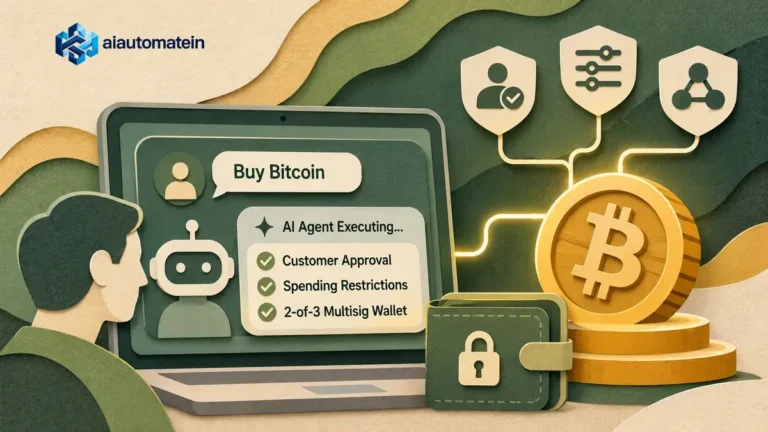
Incode says its system allows a verified person to specify which tasks an agent may perform, how much it can spend, and how long its authority should remain valid. Those instructions form a mandate against which subsequent agent activity can be evaluated.
For a commerce transaction, the difference could be significant because permission to search for products does not automatically imply permission to complete a purchase. Similarly, a banking customer might authorize an agent to retrieve account information without permitting it to transfer funds or change account details.
The technical challenge is ensuring that these limits remain enforceable when an agent interacts with multiple service providers. A mandate must be understandable to the receiving application, sufficiently specific to constrain actions, and capable of being withdrawn when the customer’s intentions change.
Incode Extends Its Identity Verification Infrastructure
The company says Incode Know Your Agent uses identity verification to establish the person responsible for an autonomous agent. Its announcement describes a live facial verification process associated with government identity records, followed by controls that connect the verified person with the agent’s permitted activities.
Incode also says the system can identify agents within business traffic, including agents that do not explicitly identify themselves. Those claims describe the vendor’s product capabilities and should not be interpreted as independently verified detection performance across every AI agent framework or service.
The company reports that the service is available to businesses as of its November 17 announcement. However, availability does not establish that independent merchants, payment providers, and agent developers have adopted a common authorization standard or can consistently exchange mandate information.
Research Distinguishes Identity From Authority
A May 2026 preprint, Digital Identity for Agentic Systems: Toward a Portable Authorization Standard for Autonomous Agents, examines why agent identity must be supplemented by explicit, constrained, auditable, and revocable authority. The paper proposes an authorization model intended to preserve the meaning of permitted actions across different systems and organizational boundaries.
This distinction is directly relevant to Incode Know Your Agent because verifying the person associated with an agent is only part of the trust decision. The receiving service must also establish whether the specific action complies with the customer’s authorization and the policies of the organization processing the request.
A reliable architecture therefore needs separate answers to several questions about identity, authorization, and execution. It must establish who the agent represents, what that person permitted, whether the request remains within scope, and which organization is responsible for enforcing the decision.
NIST Identifies Ten Agent Identity Design Tenets
The US National Institute of Standards and Technology published Design Tenets for Agent Identity Management Systems on October 27, 2026. Its proposed principles include distinct agent identification, revocable authorization, explicit mandates, human review, and the separation of policy enforcement from model reasoning.
NIST emphasizes that authorization should be time-bounded and capable of responding to changes in operational context. The guidance also recognizes that a valid agent identity does not automatically make every action performed under that identity appropriate.
These principles provide an independent framework for evaluating products such as Incode Know Your Agent. They do not constitute NIST certification or endorsement of Incode, and the publication should not imply that the vendor’s implementation has undergone independent testing against all ten tenets.
Agentic Commerce Creates New Fraud and Privacy Questions
Incode cites research suggesting growing consumer willingness to delegate selected financial tasks to AI assistants. The company also references industry estimates of substantial future commerce activity coordinated by agents, although those forecasts should not be treated as measured transaction volumes.
As this market develops, merchants and financial institutions will need to distinguish authorized agents from automated requests attempting to misuse customer accounts. They must also determine when a transaction requires renewed customer consent, additional fraud checks, or direct human intervention.
Identity verification creates its own obligations because biometric information and identity records are sensitive. Organizations should evaluate consent, data minimization, retention, access controls, and the availability of alternative verification methods rather than assuming stronger identity checks are automatically appropriate for every transaction.
Portability Is the Larger Industry Challenge
A mandate-based system becomes considerably more useful when different services can interpret and enforce the same authorization constraints. If each merchant or financial institution relies on incompatible mechanisms, consumers may face repeated enrollment, inconsistent permissions, and uncertainty about which actions remain authorized.
Incode says its offering is intended to work across payment rails and agent providers. The extent of that interoperability, including the participation of independent partners and the availability of interoperable authorization specifications, requires further evidence.
Businesses evaluating Incode Know Your Agent should therefore examine the full transaction lifecycle rather than focusing exclusively on initial customer verification. Relevant questions include how mandates are created, updated, revoked, enforced, and preserved for subsequent dispute resolution.
The Trust Decision Must Precede the Transaction
The central value proposition of Incode Know Your Agent is that autonomous software should not gain authority merely because it can present an apparently valid credential. A verifiable relationship between a person, an agent, and a specific permitted action could provide a more defensible foundation for AI-mediated commerce.
Yet implementing that relationship consistently across organizations will require more than an identity check. It will depend on trustworthy policy enforcement, meaningful customer consent, reliable audit records, and interoperability between independent participants.
Who should be accountable when an authorized AI agent initiates an unauthorized transaction? aiautomatein invites identity specialists, payment-security researchers, and enterprise architects to contribute technical evidence and practical perspectives on delegated authority in AI commerce. Submit agent identity research or an expert inquiry.
Original reporting and research
- Incode — Know Your Agent launch, November 17, 2026
- Digital Identity for Agentic Systems: Toward a Portable Authorization Standard for Autonomous Agents
- NIST — Design Tenets for Agent Identity Management Systems, October 27, 2026