
AI Agents & Enterprise AI

Small Models Earn Their Place When Task Economics Matter

Small language models enterprise task economics asks whether a smaller model can meet a defined task threshold while improving production efficiency. See how quality margin, latency, throughput, memory, correction costs and maintenance determine whether smaller really means cheaper.


Model Routing Turns Model Choice Into a Cost-Control System

AI model routing cost control lets enterprises allocate model capability according to request difficulty instead of paying frontier-model costs across all traffic. See how model eligibility, quality boundaries, traffic mix and serving-model telemetry determine whether routing actually reduces spend.

Productivity Gains Do Not Automatically Become GenAI ROI

Enterprise GenAI ROI productivity conversion is the step between employees saving time and the business capturing value. See how released capacity becomes ROI through greater throughput, avoided cost, shorter cycle times, better quality or other measurable outcomes.

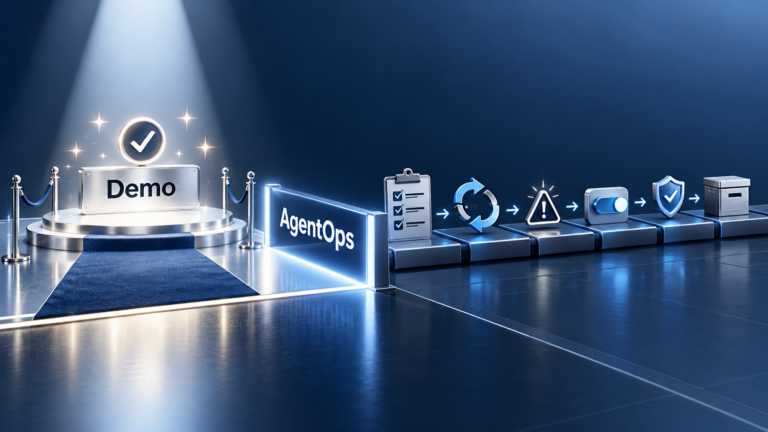
AgentOps Starts Where the Demo Stops Being Impressive

AgentOps operating model for production agents begins after deployment. See how ownership, behavioural release control, evaluation, incident learning, execution limits and retirement keep production agents fit to run as their environment changes.

Once Software Can Plan and Act, Workflow Design Changes

Workflow design for autonomous AI agents shifts the focus from fixed paths to controlled outcomes. See how objectives, available actions, business state, evidence and commitment points let agents choose different routes without making the process ungovernable.