Programmable Finance Changes What a Financial Product Can Do After Issuance
Programmable finance tokenization financial products can extend digital operation beyond issuance into settlement, servicing, coupon events, transfers and redemption. See how machine-readable terms, executable lifecycle states and interoperable infrastructure can turn a tokenized asset into a persistent operating object.


Introduction
A bond continues to generate operational work long after investors receive it.
Interest has to accrue and be paid. Ownership changes. Transfers settle. Records are updated. Corporate actions are processed. At maturity, principal has to be returned and the instrument closed.
Tokenization is beginning to pull some of that continuing activity into the financial product’s digital architecture.
Hong Kong’s first government tokenised green bond used distributed ledger technology for primary issuance, secondary-market settlement and coupon payment, with maturity redemption included in the planned digital lifecycle. By September 2026, the government’s fourth digital green-bond issuance had adopted ICMA’s Bond Data Taxonomy 2.0 to support data consistency, interoperability and end-to-end automation across the bond lifecycle.
The shift reaches beyond putting an existing security onto a new ledger.
Programmable finance changes what a financial product can do after issuance because terms, states and lifecycle events can become data and executable logic rather than instructions that separate institutions repeatedly interpret and process.
At a glance
- Tokenization can extend digital processing beyond issuance into trading, settlement, servicing, coupon events, redemption and other lifecycle activity.
- Machine-readable financial terms give systems a common representation of the product that can support automation after the closing date.
- Smart contracts are most useful where product behaviour is deterministic enough to express as defined states, roles, conditions and permitted transitions.
- The legal instrument still governs rights and obligations. Programmability adds an execution layer; it does not eliminate enforceable legal terms, governance or intervention.
- The value of programmable products depends heavily on interoperability, standardised data and connections to money, custody and existing financial infrastructure.
- The long-term architectural change is that financial products can carry more of their own operating state through their lifecycle.
Issuance is only the first state of a financial product
Most discussion of tokenized finance begins with issuance because that is when the digital representation first appears.
Much of the operational burden follows afterward.
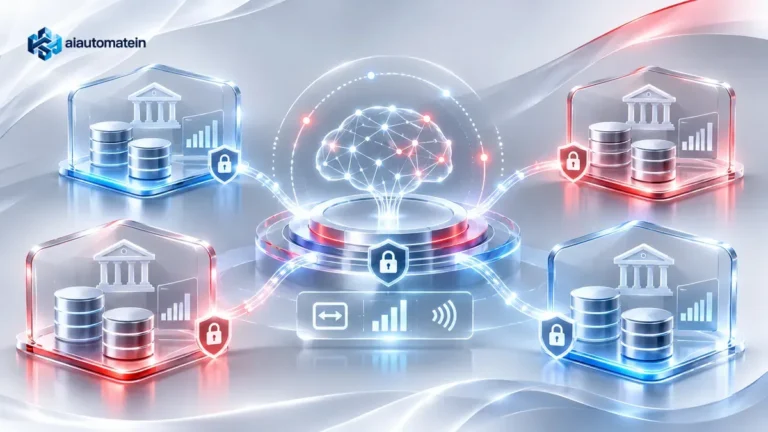
The ECB describes the lifecycle of a tokenised security as spanning structuring and issuance, trading, clearing and settlement, and asset servicing. In conventional market infrastructure, different organizations maintain their own records and exchange messages to reconcile changes. A shared ledger can reduce some of that fragmentation by allowing more lifecycle activity to operate from a common state.
Digitising issuance alone creates a digital representation of an asset. Designing for continuing digital operation requires decisions about how later events will be represented, initiated, verified and recorded.
A bond with an on-chain identity but largely off-chain servicing can still retain much of the traditional operating chain after closing. A product whose authoritative terms and permitted lifecycle transitions are machine-readable supports a different model.
Machine-readable terms can become executable product state
Financial products already contain structured rules.
A fixed-rate bond has an issue date, coupon rate, coupon schedule, maturity date, currency, principal amount and payment conventions. Funds have dealing rules, registers, subscriptions, redemptions and asset-servicing processes.
Many participants still ingest versions of those terms into separate systems, creating opportunities for fields, formats and interpretations to diverge.
ICMA’s Bond Data Taxonomy provides a machine-readable representation of key bond information. Version 2.0, released in April 2026, extended the taxonomy beyond primary issuance into trading, settlement and distribution, with the aim of improving automation, consistency and straight-through processing.
A common digital representation can feed later processes without every intermediary independently translating the same instrument.
Smart-contract architecture adds another layer.
In March 2026, DZ BANK and KfW completed a transaction using a Smart Bond Contract under Germany’s Electronic Securities Act. They described the contract as coordinating participants according to predefined conditions and controlling processes across the digital-security lifecycle.
The accompanying pilot report describes a configurable state machine in which individual states determine which participant can invoke which function. Transaction data are confirmed before progression, and final issuance terms become immutable at a defined stage.
The architecture is deliberately constrained. A financial product moves through known states, particular roles can perform particular actions, and later transitions depend on the state reached before them.
That is where machine-readable terms begin to function as more than descriptive data.
Servicing logic works best where the lifecycle rule is deterministic
Hong Kong’s first tokenised green bond provides a practical example of post-issuance digital operation.
The HKSAR Government announced in 2023 that coupon payment, secondary-market settlement and maturity redemption were designed to be digitised on the private blockchain network used for the issuance. Later reporting confirmed DLT application to primary issuance, secondary settlement and coupon payment, while redemption was included as a further lifecycle test.
ICMA’s September 2026 discussion paper on smart contracts in DLT-based fixed income similarly describes applications across issuance, settlement, servicing, repo and collateral management.
Many of those activities contain events that can be defined in advance.
A scheduled coupon date occurs. A fixed rate can be calculated from agreed terms. Maturity arrives. A transfer request either satisfies specified technical conditions or it does not.
Other events resist that treatment.
A restructuring can alter contractual rights. A legal dispute can change what an issuer owes. Default may require interpretation across several agreements and jurisdictions. Discretionary corporate actions can depend on authority that does not sit inside the token system.
Where interpretation enters, programmability needs an interface to human or institutional governance rather than an assumption that executable code has become the final source of truth.
The useful automation boundary is therefore determined by how precisely the relevant financial event can be specified before execution.
Code remains subordinate to the legal financial instrument
A token can execute logic only within a legally enforceable financial arrangement.
The Basel Framework makes that requirement explicit for tokenised traditional assets. To receive the relevant prudential treatment, tokenised bonds and similar instruments must confer the same level of legal rights as their traditional equivalents, including rights to cash flows and claims in insolvency. Rights, obligations and interests arising from the arrangement must also be clearly defined and legally enforceable.
Singapore applies a similarly technology-neutral principle. MAS’s October 9, 2026 digital-finance address reiterated that equivalent economic activity and risk should produce equivalent regulatory outcomes regardless of the technology used.
Programmability therefore gives the product another operational representation. It does not displace the prospectus, governing law, issuer obligations, investor rights or regulated institutions around the security.
The hard case appears when executable logic and legal documentation diverge.
A mature design needs to identify which representation controls, how discrepancies are detected and who can correct an operating state without silently altering investors’ legal rights.
Asset servicing can move closer to the product representation
Asset servicing is traditionally something performed around the financial product after issuance.
Tokenized architecture can bring parts of it closer to the digital representation of the instrument itself.
MAS’s Project Guardian covers tokenised funds, bonds and other financial assets. Its Funds Framework includes fund-lifecycle tokenisation, asset servicing and on-chain share-register structures, along with a composable token taxonomy for products assembled from multiple asset classes.
If ownership data, product attributes and servicing rules can operate from interoperable digital representations, downstream processes no longer need to begin by reconstructing the asset from documents and proprietary records.
A bond’s structured terms can feed later servicing processes directly. A fund unit can carry standardized information needed elsewhere in the workflow. Collateral systems can identify relevant characteristics without first translating the product through another bespoke data model.
The product becomes easier for surrounding systems to consume throughout its life.
External dependencies and interoperability define the practical limit
Putting lifecycle logic into software does not make the financial product self-contained.
A coupon process may require an authoritative date and amount. A transfer may depend on identity or eligibility information. A product linked to external performance data may rely on an oracle or another data feed. Settlement can depend on another network or institution.
If a smart contract needs a fact that exists only in a manually maintained spreadsheet, the automation boundary remains narrow. If two platforms encode the same financial term differently, shared execution becomes difficult. If the external state changes but the product receives no trustworthy update, software can execute perfectly against information that is already stale.
These dependencies are why standardisation and interoperability matter so much.
ICMA’s September 2026 smart-contract work identifies harmonisation, settlement assets, settlement finality and interoperability with DLT platforms and existing financial infrastructure as continuing requirements for scale.
The HKSAR Government’s September 2026 digital green-bond issuance used Bond Data Taxonomy 2.0 specifically to improve data consistency, interoperability and lifecycle automation.
And on October 9, 2026, MAS said commercial scaling requires common approaches to asset servicing, disclosure, interoperability and risk management, rather than isolated proprietary experiments.
A programmable product can work perfectly within one platform and still create extensive integration work everywhere else. Scale depends on whether other systems can understand both its data and the lifecycle actions that data supports.
Tokenization creates value only when the operating model changes with it
The capital-markets industry has already demonstrated that financial assets can be represented digitally.
That alone does not establish a programmable financial product.
IOSCO’s 2025 report on tokenization of financial assets found that adoption remained limited and that lifecycle changes were often more evolutionary than revolutionary because tokenised products still had to integrate with existing market infrastructure and systems.
A token can therefore reproduce an existing security on a different database while leaving most servicing and operating processes intact.
Meaningful programmability requires structured terms, agreed lifecycle states, executable rules, reliable external information, legal certainty and infrastructure capable of consuming the resulting state.
That requirement also moves some control decisions earlier in the product lifecycle.
If coupon logic will execute from structured terms, those terms must be precise before the software relies on them. If transfer conditions are enforced programmatically, authority and source data must be defined before a transfer reaches the system. If lifecycle states gate later actions, permitted transitions need to be agreed before execution begins.
Traditional operating models often discover ambiguity downstream and resolve it through reconciliation or manual intervention. Programmable products expose more of that ambiguity at design time.
Automation removes repeated interpretation only after the institution has decided exactly what should be interpreted once.
Financial products can become persistent operating objects
Programmable finance does not imply securities that operate independently of issuers, investors, custodians, infrastructure providers, regulators or law.
It changes how much operational state the product can carry in machine-readable form throughout its life.
Standardized terms can persist after issuance. The digital state can change as lifecycle events occur. Software can determine which actions are permissible in the current state. Servicing systems can work from the same underlying representation instead of repeatedly recreating it.
The issuance date no longer has to mark the end of the digital design’s usefulness.
FAQs
What is programmable finance?
Programmable finance uses machine-readable data and executable rules to automate or condition financial processes. In tokenized financial products, programmability can extend beyond issuance into settlement, servicing, coupon events, redemption, transfer processing and other lifecycle activities.
How is a programmable financial product different from a tokenized asset?
A tokenized asset is represented digitally, often on distributed-ledger infrastructure. A programmable product also uses structured data and executable logic to govern parts of its behaviour or lifecycle. A product can therefore be tokenized without automating much of what happens after issuance.
Can smart contracts automatically pay bond coupons?
They can support automated coupon processing where required terms, dates, payment conditions and settlement arrangements are sufficiently deterministic and integrated. ICMA is examining smart-contract automation across fixed-income servicing, including coupon and redemption processes.
Do smart contracts replace legal bond documentation?
No. Legal rights and obligations remain essential. Regulatory frameworks require tokenized traditional assets to preserve enforceable rights comparable with their traditional equivalents. Smart contracts can execute agreed processes, but their behaviour still needs to correspond to the legally valid financial instrument.
Why are data standards important for tokenized finance?
Programmable processes require different systems to interpret financial-product information consistently. Standardized machine-readable terms can reduce reconciliation, improve interoperability and allow lifecycle automation to extend across institutions rather than remaining confined to one proprietary platform.
The product does not stop at issuance
Coupon dates arrive. Ownership changes. Servicing events occur. Assets are used elsewhere in the financial system. Eventually, the product matures or is redeemed.
A conventional operating model distributes much of that activity across institutions, messages, databases and repeated reconciliation.
Programmable finance can move selected parts of the continuing lifecycle into shared data and deterministic execution, allowing the digital representation to remain operationally useful long after the security has been issued.
The deeper change is that a financial product can remain an active digital operating object for as long as the product itself exists.