OpenRouter ZDR Faces an Unsettling 125-Endpoint Reckoning After AI Prompt Leak Probe
OpenRouter removed 125 inference endpoints from Zero Data Retention (ZDR) eligibility and offboarded three providers on November 22, 2026, following security research by Dragos.


OpenRouter has removed 125 inference endpoints from its Zero Data Retention eligibility list and terminated relationships with three providers following a security investigation into how AI requests were handled outside the platform. The November 22 action follows research showing that sensitive prompts could be accessed, retained, or forwarded despite assurances intended to protect customer information.
The decision creates an immediate question for enterprises using AI model gateways: whether a privacy setting applied at the routing layer can be trusted when an inference request passes through providers and infrastructure that the customer does not directly control.
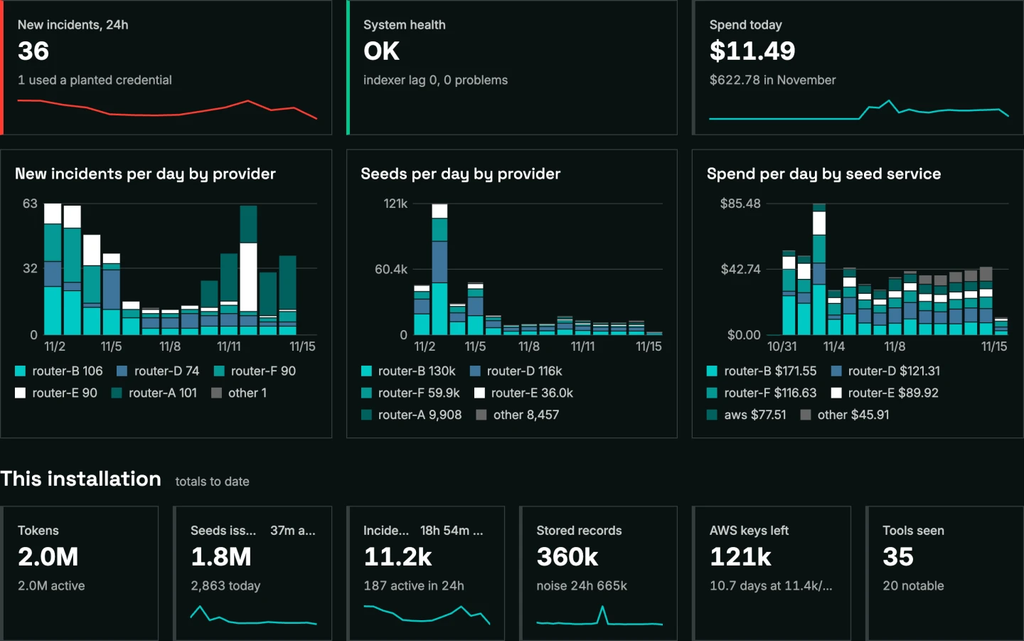
The OpenRouter ZDR enforcement changes were prompted by research from Dragos, whose investigators submitted approximately two million specially constructed prompts between July and November 2026. Their experiment uncovered evidence of provider compromises, unauthorized access to inference content, and instances in which data-handling practices did not match advertised privacy commitments.
OpenRouter Removes 125 Endpoints Following Research Disclosures
OpenRouter’s November 22 notice confirms three immediate actions. The company offboarded three inference providers, removed 125 endpoints from ZDR eligibility, and notified potentially affected customers.
The removals were not limited to endpoints where researchers identified a specific incident. OpenRouter says the affected list also included additional endpoints excluded as a precaution, so the 125 figure must not be interpreted as the number of confirmed breaches.
OpenRouter has not publicly named the three providers it removed. Although several inference companies have published their own security notices, the available information does not establish that those companies are necessarily the same three removed by OpenRouter.
The company says its investigation found no evidence of a breach or unauthorized access within OpenRouter’s own systems. The incidents instead concern downstream inference providers and the systems through which customer requests were processed.
That distinction does not eliminate the exposure faced by customers. An AI gateway can maintain secure infrastructure while a request sent through it encounters inadequate security controls or undisclosed forwarding arrangements elsewhere in the inference chain.
Dragos Used Nearly Two Million Prompts to Test Privacy Claims
HD Moore, Chief Research Officer at Dragos, published the underlying research on November 19. Rather than relying exclusively on contracts or provider descriptions, his team inserted unique URLs and monitored credentials into AI requests and observed whether those identifiers were accessed afterward.
The researchers sent nearly two million prompts during a five-month investigation. Each test could be associated with a particular request, model, routing path and privacy configuration, allowing the team to identify instances in which information appeared outside the intended processing environment.
The experiment produced three categories of findings: compromised inference providers, unauthorized access by marketplace operators, and data-handling practices inconsistent with certain declared privacy settings.
In some cases, credentials placed in the prompts were subsequently used to attempt access to controlled cloud accounts. Other prompts triggered visits to unique web addresses long after the original inference request had completed.
One investigation involved a test link appearing in a company messaging channel 24 days after the associated prompt was submitted. Its subsequent access provided evidence that the original content remained available somewhere beyond the immediate inference operation.
The research does not establish the number of genuine customer records exposed across the entire inference market. It does, however, document concrete examples in which information planted inside controlled test requests became accessible to parties or systems outside the expected processing path.
Dragos Executive Warns That Privacy Flags Cannot Stop an Intruder
Moore identified a fundamental limitation in contractual and configuration-based privacy controls. Discussing the compromised providers, he wrote, “A privacy flag doesn’t help when the attacker is already inside.”
The statement appears in his November 19 research publication, where he describes evidence that some stolen requests had been marked for Zero Data Retention. His point is specific: a policy declaring that content should not be stored does not prevent an attacker from capturing requests while they are being processed.
The distinction matters for enterprises treating a ZDR setting as equivalent to comprehensive protection against information theft. Retention restrictions address one part of the information lifecycle, while infrastructure security, credential management and the confidentiality of request-processing systems require additional controls.
Moore’s investigation also highlights the importance of tracing the actual inference route. A customer may believe its request is reaching a particular provider without knowing that the provider uses another intermediary or upstream model service.
Novita Confirms Requests Were Forwarded Beyond Its Intended Infrastructure
One of the most consequential disclosures came from Novita AI on November 22. The company confirmed that a routing configuration issue caused some requests intended for its own infrastructure to be forwarded to MiniMax’s official API.
Novita identified May 28 through November 11, 2026, as the potentially affected period. It warned that customers who used MiniMax models through Novita during that window, including those accessing Novita through OpenRouter, may have had request content accessed or retained by a third party.
The company says the forwarding configuration had been intended for a limited group of customers but was applied more broadly. It suspended the affected models, began verifying processing paths and recommended precautionary credential rotation where requests contained sensitive secrets.
The incident demonstrates why a hosting provider’s public identity is not sufficient evidence of the complete processing route. A request can cross an additional organizational boundary through an integration or configuration decision that the customer never directly approved.
Novita says its own systems do not retain customer prompts or generated responses for model training. That commitment does not resolve whether information forwarded to the upstream service was handled according to the restrictions expected by the original customer.
Together AI Discloses a Separate Credential Exposure
Together AI published an incident notice on November 21 describing unauthorized access to stored prompt samples. The company says an AI coding agent committed a credential to a public GitHub repository, inadvertently exposing access to a private Hugging Face repository containing samples collected for routine testing.
The affected samples came from requests involving MiniMax M3, GLM-5.2 and Kimi K2.6, primarily on four dates in June and July 2026. Together AI says an unauthorized party subsequently obtained the credential and downloaded the samples.
The incident illustrates a different security failure from Novita’s routing misconfiguration. In this case, the exposure involved stored test data and a development credential rather than an undisclosed inference forwarding path.
Together AI says it strengthened credential controls, introduced additional checks for secrets in pull requests and made ZDR the default for new accounts. Its CEO and co-founder, Vipul Ved Prakash, published the notice and acknowledged that customers were being notified while the investigation continued.
These cases should not be combined into a single alleged attack campaign without supporting evidence. They represent distinct disclosed failures that nevertheless expose related weaknesses in the broader AI service supply chain.
Zero Data Retention Is Not the Same as Complete Privacy
OpenRouter defines ZDR as a policy under which an eligible inference provider processes a request without retaining its prompt or response afterward. The restriction concerns provider-side storage and does not mean the information remains within the customer’s own network.
A model provider must still receive and process information to generate a response. Other systems may also retain relevant metadata, while application logs, external tools and enabled integrations can operate under their own data policies.
OpenRouter distinguishes ZDR from its Safety Retention tier, which allows certain providers to preserve content for abuse prevention under defined conditions. The company also maintains a separate Retention and Training classification.
These categories can help customers express their requirements, but their effectiveness depends on the accuracy of provider declarations and enforcement throughout the processing route. The recent incidents show why classification without technical verification may provide insufficient assurance for sensitive enterprise workloads.
There is also an important difference between persistent storage and temporary in-memory processing. OpenRouter considers certain in-memory prompt caches compatible with ZDR, while response caching and other application-level storage require separate evaluation.
The Most Immediate Enterprise Risk Is Credential Exposure
Many AI applications send more than ordinary conversational text to inference providers. Requests may include internal documents, source code, retrieved records, configuration information, and tool outputs containing operational details.
Dragos demonstrated the consequences by embedding controlled credentials in its test prompts. The researchers observed attempts to use some of those credentials against cloud systems, providing direct evidence that access to inference content can create downstream security exposure.
Organizations that submitted real credentials through potentially affected routes should examine the relevant provider notices and determine whether those secrets require revocation or rotation. They should also investigate whether exposed permissions could have enabled access to additional systems.
This review should be based on actual request histories rather than assuming every use of OpenRouter involved a compromised provider. The platform’s incident announcement does not establish universal exposure across its customers.
A separate control is to prevent secrets from entering model prompts unnecessarily. Redaction, restricted retrieval and credentials with narrow permissions can reduce the consequences when information reaches an unexpected processor.
Routing Verification Is Becoming a Security Requirement
OpenRouter says it is adapting Dragos’s testing approach for ongoing use. The company is also examining network paths to identify situations in which requests or responses may be forwarded to additional third parties.
Before restoring ZDR eligibility, the platform says providers must supply appropriate assurances and validation. That represents a shift from accepting provider claims toward requiring additional evidence after a demonstrated problem.
The technical challenge is substantial because inference routing can involve multiple layers. A model gateway may connect to a hosting service that uses another provider, which may in turn rely on separate infrastructure for model execution or supporting operations.
Monitoring only the gateway’s immediate upstream connection may therefore provide an incomplete picture. Reliable assessment requires understanding which organizations actually receive content and whether the customer has accepted their data-handling arrangements.
Dragos’s research introduced methods for investigating these relationships through controlled test requests and network observations. The approach can expose suspicious behavior, although canary-based testing cannot prove the absence of every possible form of unauthorized retention.
The Response Creates a Commercial Test for Model Marketplaces
The ability to select among competing model providers is an important feature of AI gateways. Enterprises use routing services to compare performance, manage costs and reduce dependence on one infrastructure supplier.
However, broad provider choice can create operational uncertainty when different endpoints are subject to different retention practices. Restricting traffic to a smaller number of verified providers may improve assurance while reducing available model choices or fallback capacity.
OpenRouter’s removal of 125 endpoints illustrates that tradeoff. The company has chosen to narrow ZDR eligibility while investigating the reliability of provider representations.
The commercial consequences will depend on how quickly qualified endpoints return and whether enterprises consider the revised verification process sufficiently credible. Some customers may prioritize strict data-handling assurance over model availability, while others may accept different retention conditions for less sensitive workloads.
The important requirement is informed selection. A customer should know which processing conditions apply before a request is routed, rather than discovering after an incident that the selected provider used additional systems.
aiautomatein Analysis: 2027 Could Bring a New Market for Verifiable Inference Routes
OpenRouter’s immediate response concerns an incident investigation, but the longer-term significance may be the emergence of stronger evidence requirements for AI inference providers. Enterprises that previously accepted a ZDR classification could begin requesting technical proof of the systems, intermediaries and retention controls associated with each eligible route.
One plausible development in 2027 is the introduction of continuously maintained provider assurance records. These could combine declared data policies with independent assessments, documented processing paths and the results of controlled tests.
That development would create a more specific competitive advantage than the simple availability of a privacy label. Providers able to document their processing arrangements and remediate exceptions quickly could become more attractive to customers handling confidential information.
The relevant indicators are measurable. Enterprises should monitor the number of independently verified routes, the frequency of eligibility suspensions, the time required to restore providers after corrective action, and the publication of substantive incident reports.
A second possibility is that data-handling requirements become a central element of automated model routing. Applications may select providers not only according to price and latency but also according to verified retention behavior, approved jurisdictions and contractual requirements.
Such routing could become especially important in financial services, healthcare, professional services and regulated software environments. However, achieving it would require current provider information and enforcement mechanisms capable of preventing an unsuitable fallback when an approved endpoint becomes unavailable.
The market could also face growing demand for supply chain transparency. Enterprises may request visibility into every organization involved in processing a prompt, particularly when a nominal hosting provider forwards traffic to another model operator.
This would create pressure on gateways to distinguish direct execution from reseller arrangements and multi-hop inference. Evidence of undisclosed forwarding, rather than the number of available models, could become a meaningful factor in supplier qualification.
A third possibility concerns the role of independent security researchers. Dragos demonstrated that controlled requests can produce evidence about provider behavior that contractual documents alone cannot reveal.
By 2027, similar testing could become part of enterprise procurement reviews or specialized assurance services. That outcome is conditional on the development of repeatable methods, responsible disclosure procedures and consistent interpretation of test results.
These developments would not eliminate the risk of compromise. They could instead make the limits of provider assurance more visible and reduce the distance between a published privacy commitment and the evidence supporting it.
The next test for OpenRouter is whether ongoing verification becomes a durable operating process. Published eligibility criteria, transparent remediation procedures and stronger route validation would provide more meaningful evidence of progress than restoring endpoint counts alone.
Customers Need Evidence Beyond a Privacy Setting
OpenRouter’s decision to remove 125 endpoints demonstrates that inference privacy policies can be revised when new technical evidence becomes available. The action also reveals the limits of relying on provider declarations across a marketplace where requests may traverse several independent organizations.
The findings do not establish that OpenRouter’s own infrastructure was breached or that every removed endpoint exposed customer information. They establish that the reliability of downstream handling requires continuing assessment.
For enterprise security teams, the immediate task is to identify potentially affected inference routes, examine exposure windows and apply credential remediation where appropriate. Longer-term procurement decisions should consider verified processing paths, incident transparency and controls governing the complete lifecycle of AI request data.
The November disclosures are likely to influence how businesses evaluate AI gateways because they introduce evidence into an area previously dominated by policy assertions. Inference providers will increasingly need to demonstrate not only what they promise to do with customer information, but also how those promises are enforced.
aiautomatein is examining how enterprise inference providers validate retention policies and disclose third-party processing relationships. Security researchers, enterprise AI architects and provider executives with documented technical evidence are invited to contribute to the investigation or propose an executive interview.
Frequently Asked Questions
1. Why did OpenRouter remove 125 endpoints from ZDR eligibility?
OpenRouter removed the endpoints after Dragos reported evidence of compromised inference providers and failures involving advertised data-handling practices. The company says the removals included precautionary exclusions, so the figure does not represent 125 confirmed breaches.
2. Was OpenRouter itself breached?
OpenRouter states that the research did not reveal a breach or unauthorized access within its own systems. The findings concern downstream inference providers and the processing arrangements associated with certain routes.
3. Which three providers did OpenRouter remove?
OpenRouter has not publicly identified the three providers it offboarded. Several companies have disclosed related or separate incidents, but those notices do not establish that they are necessarily the same three providers.
4. What should customers do if their prompts contained credentials?
Customers should check the affected model routes and time periods against their usage records and the applicable provider security notices. If live credentials or secrets may have been exposed, they should assess revocation, rotation and investigation of associated access activity.
5. Does enabling ZDR guarantee that no AI service retains customer information?
No. ZDR governs qualifying provider-side retention and does not automatically apply to application logs, external tools, optional storage or undisclosed upstream processing. Enterprises should assess the complete inference path and verify the controls maintained by each relevant operator.
Sources and Research
OpenRouter: Data Processing Incidents on Inference Providers, November 22, 2026
https://openrouter.ai/blog/announcements/data-processing-incidents-on-inference-providers
Dragos: Three Breaches, Endless Leaks, November 19, 2026
https://www.dragos.com/blog/ai-supply-chain-security-canary-tokens
Novita AI: Privacy Notice Regarding MiniMax Requests, November 22, 2026
https://novita.ai/blog/minimax-requests-privacy-notice
Together AI: Security Event, Prompt Leakage for Requests in June and July 2026, November 21, 2026
https://www.together.ai/blog/security-event-prompt-leakage-for-requests-in-june-and-july-of-2026
OpenRouter: Zero Data Retention, September 2026, Updated October 27
https://openrouter.ai/blog/insights/zero-data-retention
Cloud Security Alliance: Canary Evidence of Prompt Theft at AI Inference Providers, November 2026