Google Workspace MCP Rules Trigger Urgent AI Access Overhaul Across 8 Productivity Apps
Google has introduced new AI agent access requirements across eight Workspace applications, including Gmail, Drive, and Calendar. The announcement introduces managed MCP and CLI connectivity, dedicated agent identities, human approval controls, and revised API usage tiers ahead of enforcement deadlines in February and April 2027.

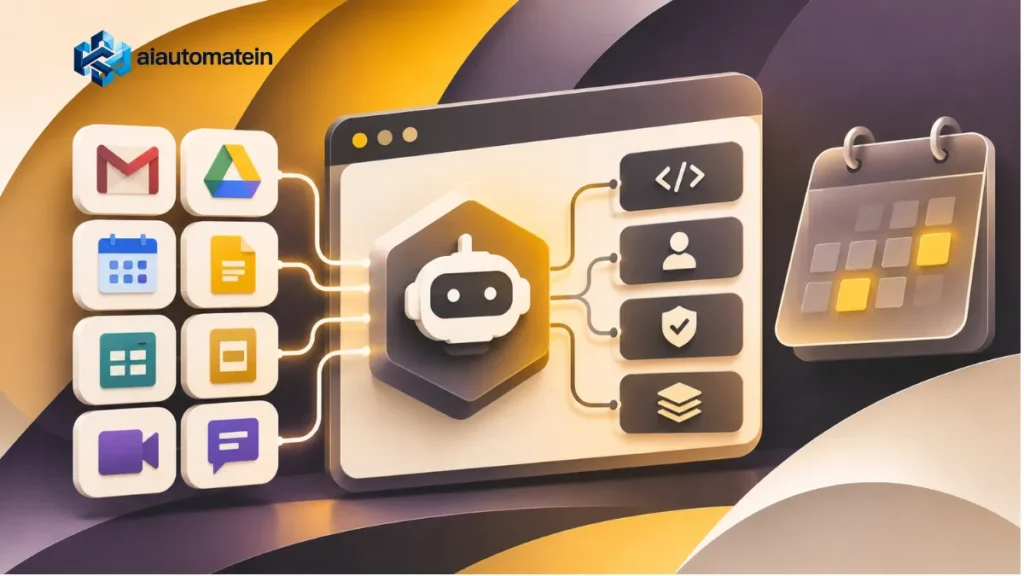
Google has announced new security requirements for AI agents accessing enterprise information across Gmail, Drive, Calendar and five other Workspace applications. The November 24, 2026, announcement introduces mandatory agent-specific connectivity requirements, dedicated authentication credentials and human approval controls for sensitive actions.
The Google Workspace MCP rules require autonomous AI applications to connect through Google’s managed Model Context Protocol (MCP) servers or its command-line interface (CLI) instead of traditional REST APIs. Technical enforcement begins on February 1, 2027, followed by changes to API billing and usage limits on April 1.
The announcement comes as Google reports that Workspace APIs handle more than 2.8 trillion monthly calls, illustrating the scale of the infrastructure that increasingly supports autonomous enterprise applications.
Google Makes Workspace MCP Servers Generally Available
Google has made its managed MCP servers generally available across eight productivity applications: Gmail, Drive, Docs, Sheets, Slides, Calendar, Chat and Tasks. Support for Google Keep is expected to follow.
The servers provide cloud-based AI agents with a standardized interface for interacting with Workspace information while applying organizational security policies. Google has also made its Workspace CLI generally available for local AI agents, desktop applications and automated workflows.
The Google Workspace MCP rules address an architectural distinction between traditional software and autonomous applications. Conventional API integrations generally execute predetermined functions, whereas AI agents can dynamically determine which tools to invoke and which actions to perform.
That flexibility creates new security considerations when autonomous systems interact with confidential documents, customer communications and business-critical information.
Six New Protections Target Autonomous AI Workflows
Google has outlined six security protections governing how AI agents interact with Workspace data.
| Security protection | Enterprise implication |
|---|---|
| Governed MCP and CLI access | Requests undergo organizational policy checks |
| Dedicated agent identities | Administrators can distinguish AI agents from conventional applications |
| Human approval controls | Sensitive actions require appropriate confirmation |
| Activity monitoring and revocation | Administrators can inspect and terminate agent access |
| Sensitive information restrictions | Planned controls will restrict access to designated emails and files |
| External data-handling requirements | Restrictions apply to storage, retention, training and scraping |
The protections do not all share the same availability timeline. Some capabilities, including time-limited approvals and additional restrictions on sensitive emails and files, are scheduled for future release.
For enterprise administrators, the immediate significance of the Google Workspace MCP rules is the ability to apply security policies directly to agent activity rather than relying exclusively on the initial authorization granted to an application.
Google Introduces a 5,000-Request Daily MCP Allowance
Alongside the security announcement, Google has introduced standardized usage tiers for Workspace APIs and MCP servers. The Standard Tier provides up to 5,000 daily MCP requests per project, per supported product, without requiring a Google Cloud billing account.
Organizations requiring higher MCP usage limits must enroll in the Scaled Tier and request the relevant quota increases. For the Gmail, Calendar and Drive MCP servers, Scaled Tier billing begins on April 1, 2027, with charges applying from the first successful request.
Google expects fewer than 1% of active Workspace developers to require usage beyond the Standard Tier. That estimate is company-reported and does not establish the future consumption requirements of rapidly expanding enterprise AI applications.
| Effective date | Development |
|---|---|
| November 24, 2026 | Standard and Scaled usage tiers introduced |
| February 1, 2027 | New agentic access requirements take effect |
| April 1, 2027 | Scaled Tier billing and standard quota enforcement begin |
The commercial implications could be particularly relevant to AI vendors operating high-volume workflows involving email analysis, document retrieval and calendar management.
An agent executing several interconnected tasks may generate considerably more infrastructure activity than a conventional application processing a single request. Developers will need to evaluate consumption at the workflow level when determining the economics of their products.
AI Agents Must Obtain Approval for Consequential Actions
Google’s updated security model introduces user confirmation requirements for sensitive operations, including sending external emails, changing document-sharing permissions and performing bulk modifications.
The distinction between retrieving information and executing an action is central to the new framework. An agent summarizing a document presents a different operational risk from one capable of modifying its access permissions or distributing its contents externally.
This development complements broader enterprise concerns surrounding delegated authority, as examined in aiautomatein’s recent coverage of FCA AI Agent Regulation. Although Google’s requirements operate within a technology ecosystem rather than a financial regulatory framework, both developments emphasize the importance of controlling what autonomous systems are authorized to do.
Google Workspace administrators will also be able to monitor agent activity and revoke access through established management interfaces.
New Data-Handling Rules Could Affect Enterprise AI Architecture
The Workspace AI Tools Addendum establishes restrictions on how external AI applications process information obtained from Google’s services. These include prohibitions on permanent raw-data storage, model training using covered data, API scraping and retention beyond specified periods.
The Google Workspace MCP rules could therefore affect applications that maintain persistent external knowledge repositories using enterprise emails and documents.
Vendors developing AI-powered knowledge management, customer intelligence and retrieval-augmented generation products will need to assess their data-processing architectures against the applicable terms.
Google’s announcement does not prohibit third-party AI agents from accessing Workspace. It establishes technical and policy conditions intended to govern that access while preserving conventional REST API functionality for non-agentic applications.
aiautomatein Analysis: Will Governed Agent Access Become an Enterprise Standard in 2027?
Google’s announcement could accelerate demand for enterprise infrastructure that manages autonomous access across multiple software ecosystems. If other major productivity platforms introduce comparable requirements, AI developers may need to support increasingly diverse authentication, approval and data-retention policies.
The opportunity extends to agent gateways, identity management technologies and enterprise integration platforms capable of enforcing consistent operational policies across autonomous workflows.
During 2027, three indicators could help assess this development: adoption of managed MCP integrations, the frequency of agent actions requiring human confirmation, and the infrastructure expenditure associated with autonomous application access.
For enterprise AI vendors, the immediate challenge is preparing their existing Google Workspace integrations for the February enforcement deadline without disrupting customer workflows. The longer-term competitive advantage could belong to platforms that make autonomous access both scalable and governable.
aiautomatein welcomes perspectives from enterprise AI developers, security architects and integration providers through our editorial contact page.
Frequently Asked Questions
1. What are the new Google Workspace MCP rules?
Google requires AI agents accessing Workspace information to connect through its managed MCP servers or Workspace CLI rather than traditional REST APIs. The requirements introduce dedicated authentication, security policies and data-handling restrictions.
2. When do Google’s new AI agent requirements take effect?
Technical enforcement begins on February 1, 2027. New billing and standard quota enforcement measures follow on April 1, 2027.
3. Which applications support Google Workspace MCP servers?
The generally available MCP servers support Gmail, Drive, Docs, Sheets, Slides, Calendar, Chat and Tasks. Google Keep support is planned.
4. How much does Google Workspace MCP access cost?
The Standard Tier provides up to 5,000 daily MCP requests per project, per supported product, without charge. Higher usage requires Scaled Tier enrollment, with applicable billing beginning April 1, 2027.
5. Is Google banning third-party AI agents?
No. Google is establishing governed access requirements for external AI agents. Traditional non-agentic applications can continue using conventional REST APIs, subject to applicable usage policies.
Sources
- Google Workspace Blog: Built for trust and control: New AI agent protections and developer tools in Google Workspace, November 24, 2026; https://workspace.google.com/blog/product-announcements/built-for-trust-and-control-new-ai-agent-protections-and-developer-tools-in-google-workspace
- Google Cloud Blog: Deploying agents safely in your enterprise, November 24, 2026; https://cloud.google.com/blog/products/identity-security/deploying-agents-safely-in-your-enterprise
- Google for Developers: Usage tiers and quotas for Google Workspace APIs and MCP servers; https://developers.google.com/workspace/guides/quota-usage-tiers