
Mastercard introduces trust signals for AI-initiated payment transactions
Mastercard expands Agent Pay with identity, intent and fraud-intelligence signals for AI-led purchases, while its first agent-initiation probability score enters US testing.

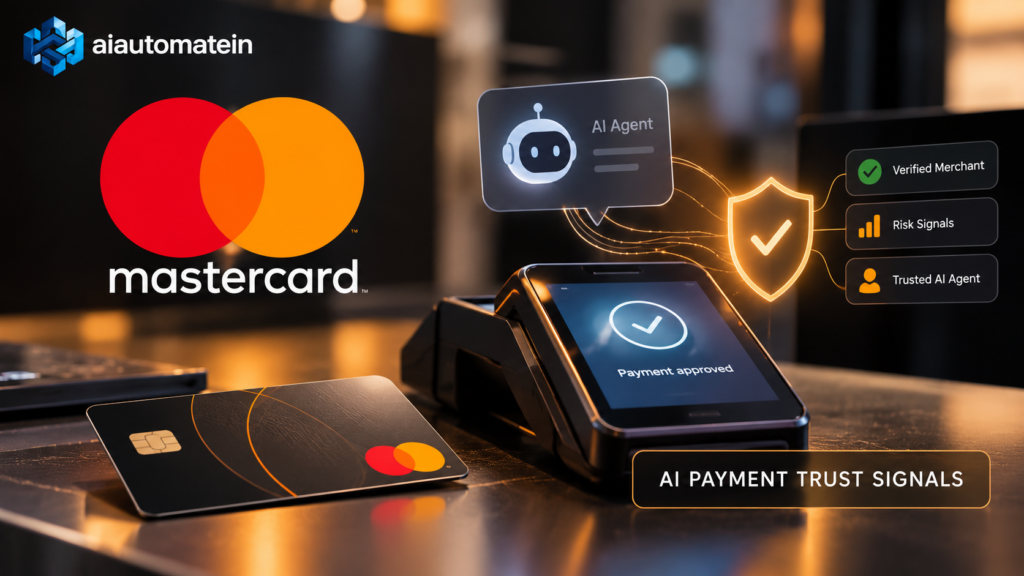
The Agent Pay expansion adds transaction intelligence to help banks and merchants assess AI-led purchases. Its first probability-scoring service is entering US testing, not general availability.
Mastercard introduces trust signals for AI-initiated payment transactions in an expansion of Agent Pay announced on 30 September 2026. The services are intended to help banks and merchants assess purchases made by AI assistants, starting with a probability score that estimates whether an agent initiated a payment. Mastercard says the score is rolling out for testing in the United States.
The official announcement describes an intelligence layer combining identity, purchase intent, behavioural information and fraud indicators. It sits within Mastercard’s Agent Pay Trust Framework, which also covers agent identity, permissions and transaction execution. The aim is to give payment participants more context before deciding whether additional checks or authorisation are appropriate.
US testing focuses on identifying agent-initiated payments
The probability score measures the likelihood that an AI agent started a transaction. It does not certify that the agent is genuine or establish that the consumer authorised that particular purchase. Those questions require separate identity, intent and payment controls; the score is an input to the issuer’s decision, not the decision itself.
Mastercard has not published detection-accuracy figures, false-positive rates or a general-availability date for the score. The September announcement identifies US testing, not deployment to every Mastercard issuer or merchant. The company says future versions will incorporate additional information about merchant risk, transaction patterns, credentials and consumer behaviour.
More context for purchases that appear unusual
The broader trust signals are designed to identify departures from expected patterns and activity involving an agent, merchant, credential or transaction that warrants review.
A travel-booking assistant, for example, might make several purchases from different merchants after receiving a customer’s approval. Such a sequence could appear unusual to conventional fraud-detection systems even when the purchases are legitimate. Mastercard says additional context could help distinguish authorised agent activity from transactions requiring closer examination.
The company has not reported independently verified improvements in fraud losses, payment approval rates or customer friction attributable to the newly announced services.
Cloudflare and Skyfire support the trust framework
Mastercard is exploring privacy-preserving methods of combining web and payment-network signals with Cloudflare. It is also working with Skyfire, whose Know Your Agent technology is intended to help financial institutions and merchants recognise and verify AI agents.
The partnerships support Mastercard’s wider approach to agent identity and transaction intelligence. However, the company has not established that every proposed verification or risk-assessment capability is already operating across its payment network.