Workday brings governed decision intelligence to finance and HR
Workday expands Decision Intelligence to finance and HR, enabling governed financial investigation, scenario comparisons and approved actions using live enterprise data.

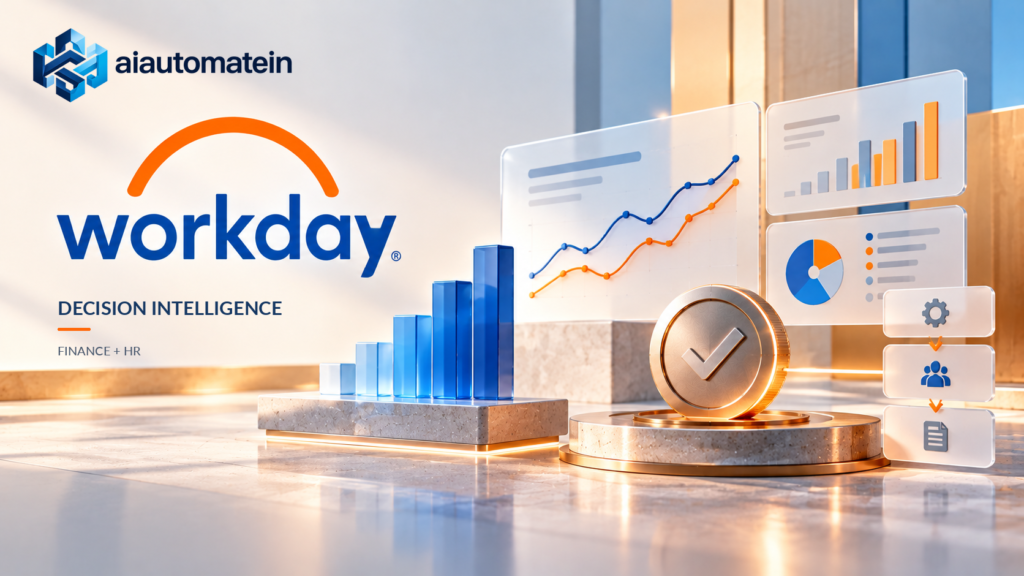
The new capabilities let finance teams investigate variances and compare scenarios using governed Workday data, with approved decisions moving through existing business processes and controls.
Workday announced on 13 October 2026 that its Decision Intelligence service is now available to Workday Financial Management and Human Capital Management customers. The company says finance and HR teams can question live business data, compare responses to financial and workforce changes, and move approved decisions through existing Workday processes rather than relying on disconnected spreadsheet exports.
In its official announcement during Workday Rising 2026, Workday said the service brings financial, workforce and planning information into a governed AI experience that uses existing system permissions. Decision Intelligence had previously been available for financial planning and analysis through Adaptive from Workday; the latest release extends it to more finance and HR work.
Workday Decision Intelligence helps finance teams investigate variances
Workday says finance and accounting teams can use natural-language questions to examine changes in revenue, margins, costs, forecasts and balance-sheet figures. Rather than rebuilding an analysis from exported reports, users can trace differences across dimensions such as company, cost centre, product or customer.
Its Decision Intelligence product information also describes tools for flux analysis, balance-sheet movement and general-ledger investigation. These capabilities are intended to connect a reported variance with the underlying journal entries or source transactions and provide an initial explanation for review.
Workday gives an example in which revenue increases while margins decline. Finance teams could investigate the drivers and compare responses, such as changing investment timing, reallocating budgets or revising forecast assumptions. These are examples of supported decision workflows, not independently measured customer outcomes.
Approved financial decisions retain existing controls
The company says recommendations can be sent through established approvals, with a record of the assumptions, decisions and subsequent actions. Workday’s product description also includes governed scenario write-back to Adaptive, allowing updated planning scenarios to be stored as new plan versions with their dimensional structure and version history retained.
That does not mean the system has unrestricted authority to change financial plans or accounting records. Workday describes approved actions operating within its existing permissions and business processes; the announcement does not establish that the AI can bypass them.
The release extends the same analysis-and-decision approach to workforce planning. HR teams can compare options including hiring externally, developing existing employees or adjusting timelines while considering costs and staffing needs. This gives finance and HR a common planning context, although the announcement does not claim all customer data or workflows are automatically connected.
Workday confirms availability for Financial Management and HCM customers
Workday lists Decision Intelligence as available to its Financial Management and HCM customers, while Decision Intelligence for Adaptive remains available to Adaptive customers. The announcement does not specify that every described function is enabled by default for each customer or provide independent figures for time savings or decision accuracy.
For finance teams, the practical change is access to live Workday financial and planning data during variance investigation, followed by scenario comparison and an approval-controlled route to action. The extent of those capabilities in a given organisation will depend on its Workday products, permissions and configured processes.